
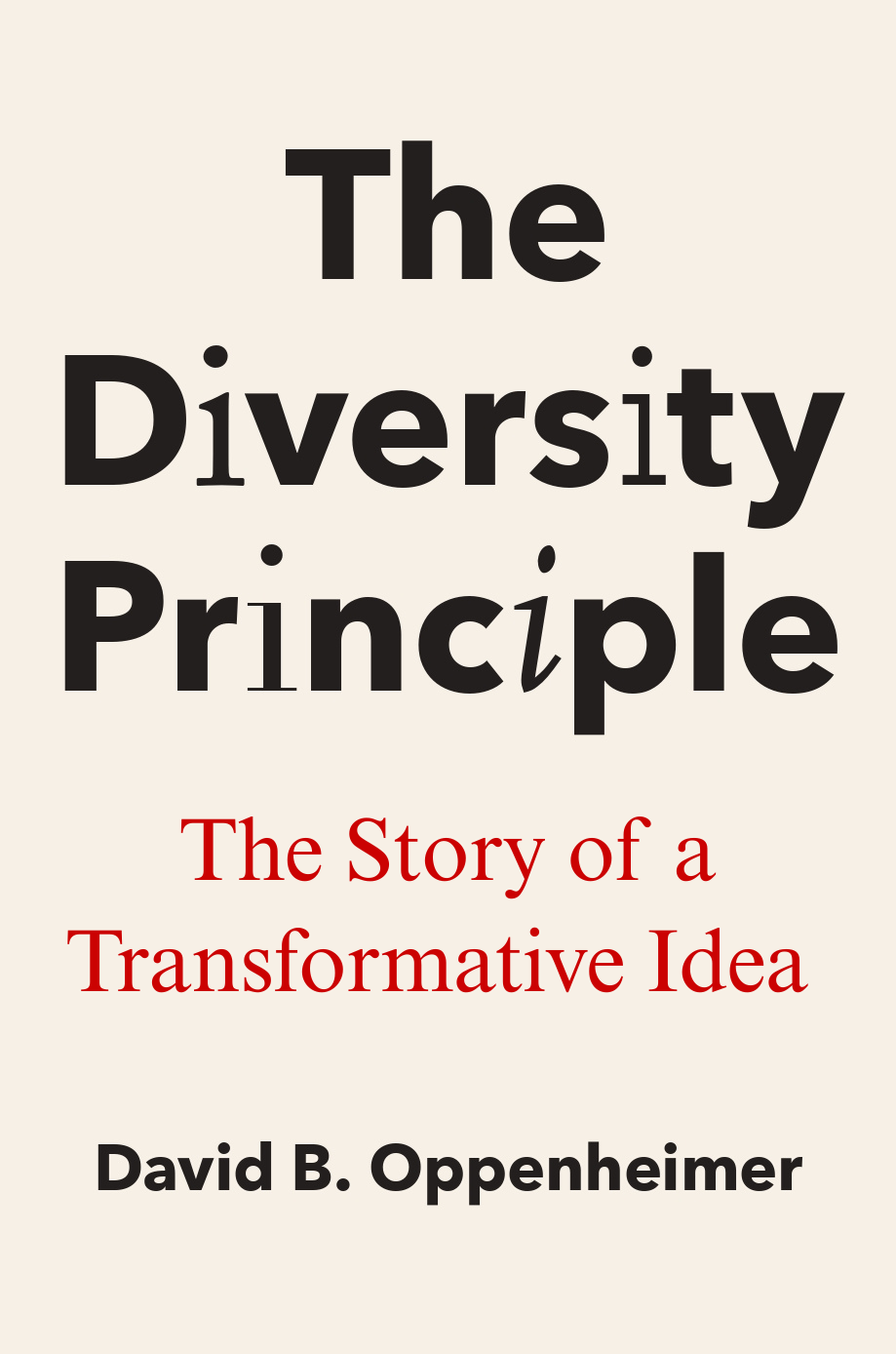
This was a core tenet of the first modern research university, founded in Germany in 1810. It was the inspiration for John Stuart Mill’s On Liberty, a touchstone of academic freedom, a hallmark of Charles Eliot’s remaking of Harvard in the late nineteenth century to promote the “clash of ideas,” and a foundation of Thurgood Marshall, Ruth Bader Ginsburg, and Pauli Murray’s work for racial and gender equality in the mid-twentieth. In telling the story of the diversity principle through the experiences of these and other remarkable thinkers, Oppenheimer argues for affirming diversity as a central value of education and “an essential ingredient for a robust intellectual and political culture.”
People with different backgrounds, experiences, and viewpoints benefit from engaging with each other. That’s why it’s important for people who are insiders to expand their circles to include outsiders, and vice versa. The experience of being an outsider is often influenced by age, religion, ethnicity, gender, race, language, disability, economic class, and other forms of identity. Compared with groups that are more homogeneous, diverse groups do a better job of solving problems, making discoveries, teaching and learning from each other and improving democratic discourse.
What is the Diversity Principle?
Praise for The Diversity Principle